
A Day with a Master: Learning Fileteado Porteño in Argentina

One of my favorite parts of traveling the world is diving into the local art traditions that make each place unique. There’s something deeply moving about learning a craft that’s been passed down through generations—especially when you’re able to experience it in the very place where it was born.
In Buenos Aires, that experience began in the back seat of a cab.
I remember weaving through the lively streets of the city center, watching balconies and cafés blur past the windows, before pulling up in what looked like an entirely ordinary neighborhood. Nothing about the building hinted at what was waiting inside. Just a normal front door, quietly blending in with its surroundings. But behind it was a hidden world of color, history, and tradition.
I had arrived at an atelier to learn Fileteado Porteño, the iconic painting style that originated on the streets of Buenos Aires. When I was ushered inside, I was completely stunned. The space opened up into high ceilings and walls alive with swirling lines, vivid colors, and intricate designs. Every surface felt like a celebration—ornate lettering, flourishes, flowers, and symbols that told stories of the city itself.

I spent the day with a true master of the craft, Alfredo Genovese, whose knowledge and passion for Fileteado Porteño were as impressive as the artwork surrounding us. He walked me through the history of this vibrant tradition, which began in the late 19th and early 20th centuries. Originally painted by immigrant artisans on horse-drawn carts, Fileteado was a way to personalize everyday objects. Over time, it became more elaborate, incorporating bold colors, symmetrical patterns, scrolling lines, and poetic phrases—often reflecting love, humor, or Argentine pride.
As Buenos Aires evolved, so did Fileteado. What once adorned carts and delivery wagons eventually found its way onto buses, storefronts, street signs, and even musical instruments. Today, you can still spot it throughout the city—on murals, cafés, tango halls, and contemporary art pieces—serving as a living reminder of Buenos Aires’ cultural identity. In fact, Fileteado Porteño has been recognized by UNESCO as part of Argentina’s intangible cultural heritage.

Of course, learning about the tradition was only part of the experience. Alfredo handed me a brush and invited me to try the technique myself. That’s when I quickly learned just how challenging it really is. Fileteado requires an incredibly steady hand—each stroke must be deliberate, smooth, and confident. The brush glides and curves in a way that leaves no room for hesitation. My deep respect for the masters of this art grew with every attempt.
By the end of the day, my hands were speckled with paint and my head was full of inspiration. There’s something magical about immersing yourself in a craft so deeply rooted in place and
history. I left the atelier feeling grateful—not just for what I learned, but for the chance to connect with Buenos Aires in such a meaningful way.


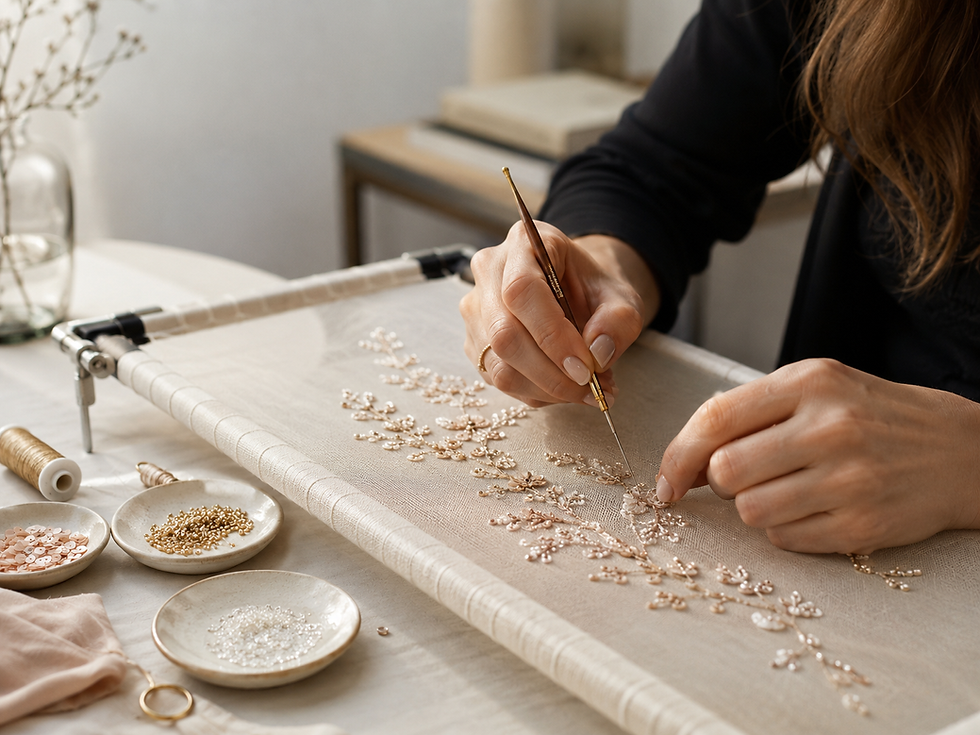
I already know this experience will stay with me. I can’t wait to bring a touch of this Argentine artistry into my future embroidery designs, translating those swirling lines and vibrant colors into thread. Traveling may take me far from home, but it’s these moments—hidden behind unassuming doors—that truly shape the way I create.



Comments