
The Intersection of Traditional Crafts and Modern Haute Couture in Fashion

In the ever-changing landscape of fashion, where styles shift overnight, exists a realm of timeless beauty shaped by the skills and traditions of the past. Traditional crafts play a vital role in modern haute couture, as designers look for depth and storytelling in their works. This remarkable partnership preserves time-honored techniques while adapting them to fit contemporary tastes. A key figure in this evolution is Karl Lagerfeld, who, by acquiring smaller ateliers like Lesage and Legeron for Chanel, ensured that the art of embroidered and beaded craftsmanship not only survives but thrives in today's design landscape.
I am personally thankful to Karl for helping to ignite these ateliers, as I attended Lesage to earn my certificate in Professional Haute Couture Beadwork and Embroidery.
The Resurgence of Traditional Crafts in Fashion
The fashion industry is witnessing a significant revival of traditional crafts, driven by a growing emphasis on sustainability. These exquisite skills, often passed down through generations, stand in stark contrast to the mass production typical of today's clothing industry. Haute couture houses are now leaning toward techniques that demand time, patience, and an appreciation for artistry. In a "throw-away world" full of fast fashion, this is a refreshing change.
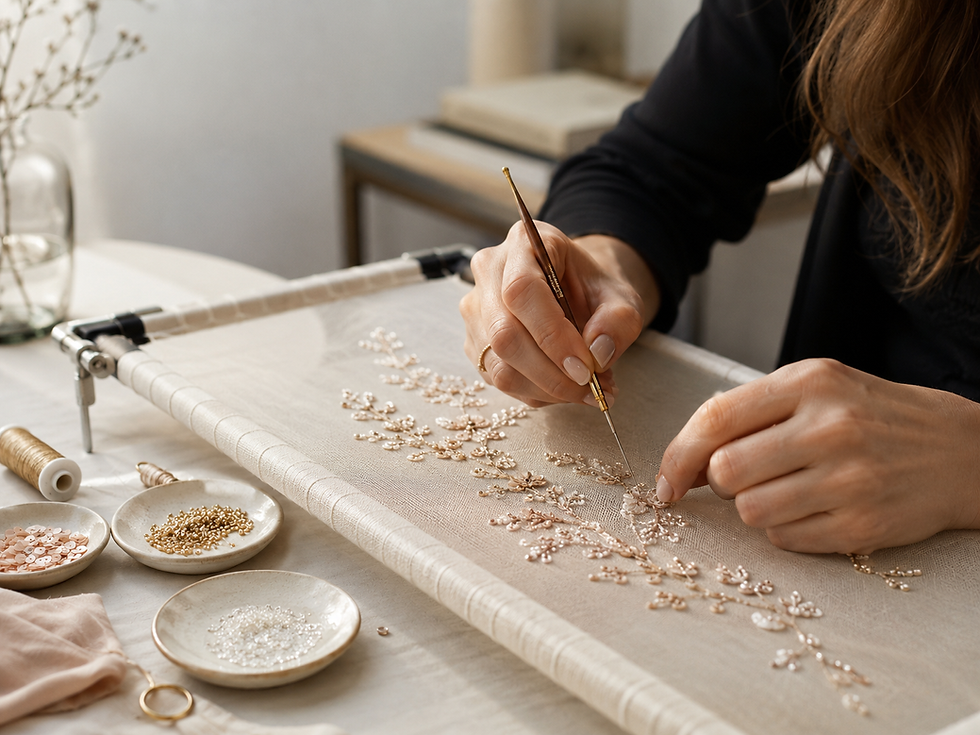
For instance, couture embroidery uses intricate hand-stitching, with pieces often taking hours, if not days, to complete. Consider the case of a single haute couture dress, which might feature thousands of hand-applied sequins, each reflecting light in unique ways. Such details not only elevate quality but also provide emotional depth, making each garment a wearable story.
With consumers becoming more discerning, they increasingly seek garments that embody authenticity and craftsmanship. Handcrafted items offer a comforting alternative to the cookie-cutter styles of fast fashion, making traditional crafts a meaningful and profitable aspect of modern haute couture.

Karl Lagerfeld's Legacy: Investing in Artisanal Talent
Karl Lagerfeld’s pioneering vision transformed haute couture and brought artisanal craftsmanship to the forefront. He recognized that haute couture's essence lay not just in innovative design but also in the painstaking handiwork that brings garments to life. By acquiring small, specialized ateliers like Lesage and Legeron, Lagerfeld safeguarded essential skills while fortifying Chanel’s creative identity.
With this strategy, Lagerfeld ensured that intricate couture embroidery, beadwork, flower making and other traditional crafts remained focal points of Chanel's offerings. The Lesage atelier, celebrated for its exquisite hand-embroideries, became a cornerstone for Chanel's signature haute couture looks. This fusion of craftsmanship and modern design encapsulated Lagerfeld's ability to harmonize the old with the new, creating inspiration for many designers today.
Today, Chanel has purchased a total of twelve ateliers, under a subsidiary company. Each atelier offers unique traditional crafts that serve the couture industry. Some of them include:
Lesage - Renowned for embroidery and tweed making.
Lemarié - Specializes in feather work and flower making, including Chanel's iconic camellia.
Massaro - A shoemaker known for Chanel's two-tone shoes.
Maison Michel - Expert in hat-making and millinery.
Goossens - A goldsmith creating jewelry and accessories.
Desrues - Crafts buttons, jewelry, and metalwork.
Atelier Montex - Focuses on intricate embroidery.
Les Ateliers Lognon - Masters of pleating and textile shaping.

The Adaptation of Craft Techniques
While traditional crafts continue to thrive, they have also evolved to align with modern aesthetics. Designers frequently merge time-honored techniques with contemporary styles, leading to pieces that honor the past while captivating today's consumers. A perfect example of this blend is found in gowns that feature modern prints embellished with traditional embroidery, crafting a stunning contrast.
Additionally, the rise of digital technologies has provided artisans with fresh tools. For example, the use of 3D printing for embellishments allows for precise designs that were once solely in the hands of skilled artisans. Such innovations do not weaken tradition; they enhance it, demonstrating that traditional crafts can indeed adapt while remaining relevant.
The Emotional Connection with Handcrafted Items
At the core of haute couture lies a profound emotional connection rooted in craftsmanship. Each piece isn’t simply clothing; it embodies an experience, a story mirrored in fabric and thread. Fashion lovers yearn for items that resonate with their own narratives, and traditional crafts can fulfill this deep desire.
Knowing the history and effort that go into their garments adds precious value. The stories behind the artisans, the dedicated hours spent on each piece, and the skill involved imbue high-fashion items with a sense of worth that outlasts fleeting trends. The passion involved in crafting these items creates an exclusive allure, drawing fashion enthusiasts to invest in unique, meaningful pieces.
Sustainability in Haute Couture: A Return to Roots
The negative impact of fast fashion on the environment has sparked a greater focus on sustainability in traditional crafts. Many haute couture houses are now emphasizing a return to their roots by committing to longevity and integrity in their creations. This approach aligns perfectly with the principles of traditional crafts, where both durability and quality are critical.
Designers who favor handcrafted elements embrace a slower, more deliberate path in fashion. Such shifts not only preserve techniques and cultural heritage but also foster a consumer base that values the finer aspects of fashion. As sustainability takes center stage in modern design, the age-old practices of traditional crafts will remain essential.
The Future of Traditional Crafts in Haute Couture
The future of traditional crafts in haute couture looks bright, despite some challenges. The ongoing demand for quick and accessible fashion remains strong, yet a growing appetite for unique, high-quality items fosters renewed interest in artisanal skills.
Emerging designers are increasingly inspired to learn from traditional craftspeople, integrating these techniques into their work with modern insights. Educational programs focusing on artisanal skills are being established, ensuring that these vital crafts remain alive. This revival will play a crucial role in preserving the art of haute couture for future generations.

Collaborations Between Modern Designers and Traditional Artisans
A key trend in the fashion world is the collaboration between contemporary designers and traditional artisans. These partnerships breathe new life into classic crafts, producing innovative pieces that attract fashion-savvy audiences. Renowned designers like Valentino and Dior have teamed up with artisans to create collections rich in heritage yet appealing to modern tastes.
These collaborations fuel creativity and provide artisans with exposure, showcasing their crafts to wider audiences. Consequently, traditional techniques experience renewed interest, capturing the attention of fashion enthusiasts who value skilled craftsmanship married with contemporary design.
A Fashionable Future Together
The intersection of traditional crafts and modern haute couture showcases a vibrant relationship marked by respect, adaptation, and collaboration. Karl Lagerfeld's commitment to artisanal skill sets has proven invaluable, enabling haute couture to thrive on craftsmanship's nuances.
In a time increasingly dominated by mass production, the lovingly crafted methods of the past are finding renewed importance in the future of fashion. This blend enriches haute couture with depth, passion, and sustainability. As we forge ahead, this intersection will continue to evolve, celebrating the artistry that makes haute couture a cherished part of luxury fashion.

Traditional crafts not only safeguard the artistry of haute couture but also challenge us to appreciate the workmanship behind each garment. The stories woven into these creations, the skilled hands that crafted them, and the traditions they represent serve as a testament to fashion's enduring beauty and significance.
Through collaborative efforts and the dedication of designers, traditional crafts will remain a lively aspect of haute couture, enchanting fashion enthusiasts for generations to come.



I was comparing hoodie suppliers yesterday and came across this page. The selection of plain hoodies for printing looks suitable for startups and established brands alike.
The fusion of traditional craftsmanship with modern haute couture truly highlights the artistry and heritage behind fashion. At Rooh London https://www.roohlondon.co.uk/, we celebrate this very intersection offering designs that honor time-honored techniques while embracing contemporary aesthetics. If you’re exploring pieces that reflect this beautiful blend, Rooh London is a place where tradition meets modern elegance.